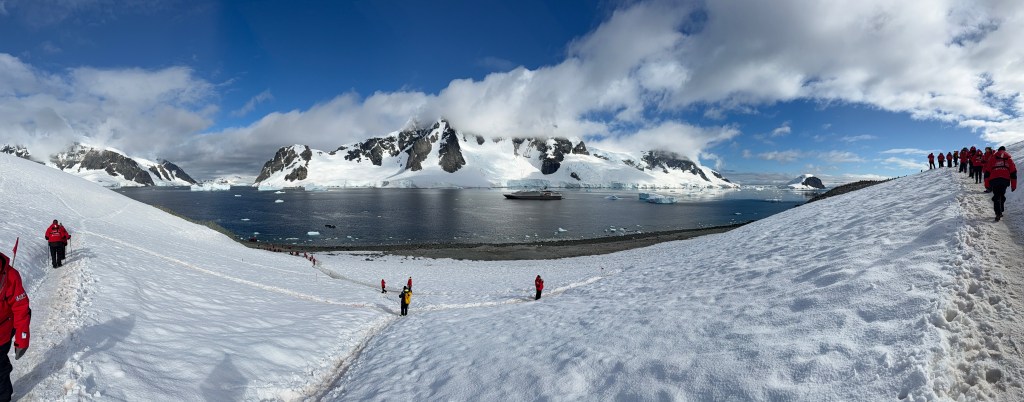
Choosing an Antarctica tour is stressful all by itself – The cost is high, this is usually a once-in-a-lifetime experience you don’t want to get wrong, there’s endless options, and there’s not much info out there except for tour operator sites. Now, I’m not an Antarctica travel expert by any means, keep doing that research and find what best fits your expectations!
Types of tours
Traditional Ocean Cruises:
- What is it?
- Picture that large Caribbean cruise ship sailing past beautiful icebergs and mountains, maybe spotting some whales and other wildlife along the way! Think NCL, Princess, Celebrity.
- Pros:
- Your typical cruise ship, larger ships, more dining options, if you’ve been on a cruise ship, you’re gonna know what to expect here. You’ll still see and experience the vastness of this great continent. Lower cost.
- Cons:
- No stepping foot on Antarctica or surrounding lands, lack of immersive experience with land and sea wildlife. You’ll miss all of the nooks and crannies of the Antarctic, including icebergs.
Expedition Cruises:
- What is it?
- Smaller expedition cruise ships designed with reinforced ice hulls holding less than 200 passengers. Ships are outfitted with smaller zodiac boats that take passengers from the boat’s deck off the back (the marina) on wildlife cruises and landings.
- Pros:
- Smaller number of passengers, more tailored service. Two-time daily landings or cruises (AM and PM). Most expeditions have optional kayaking, polar plunge, camping and sometimes helicopter and scuba diving. Includes education on rock formations, animals in the area, research stations, history. More on this later!
- Cons:
- More expensive, the cost to take travelers on zodiacs and landings is quite expensive. Sailings across the Drake Channel can be weather dependent, as are zodiac cruises and landings. You may get delayed.
“Fly the Drake” Tours
- What is it?
- Ah yes, the Drake Passage. To get from Argentina or Chile to Antarctica, your ship must sail through the Drake – sometimes dubbed the most treacherous stretch of water on Earth, with larger waves more likely. Don’t like boats or water? Check out the “Fly the Drake” expedition options and pick up your cruise in Antarctica. I’ll note later, that good ship captains will avoid weather, both wind and waves every chance they get – I did not have issues with seasickness.
- Pros:
- Fly from Argentina or Chile directly to Antarctica, and skip the seasickness meds. Chartered flights take about 2 hours, your ship will take 1-2 days depending on weather conditions. Some offer options to fly one way, and sail back the other – Good flexibility.
- Cons:
- Even more expensive than an expedition cruise. Planes land visually and can be cancelled.
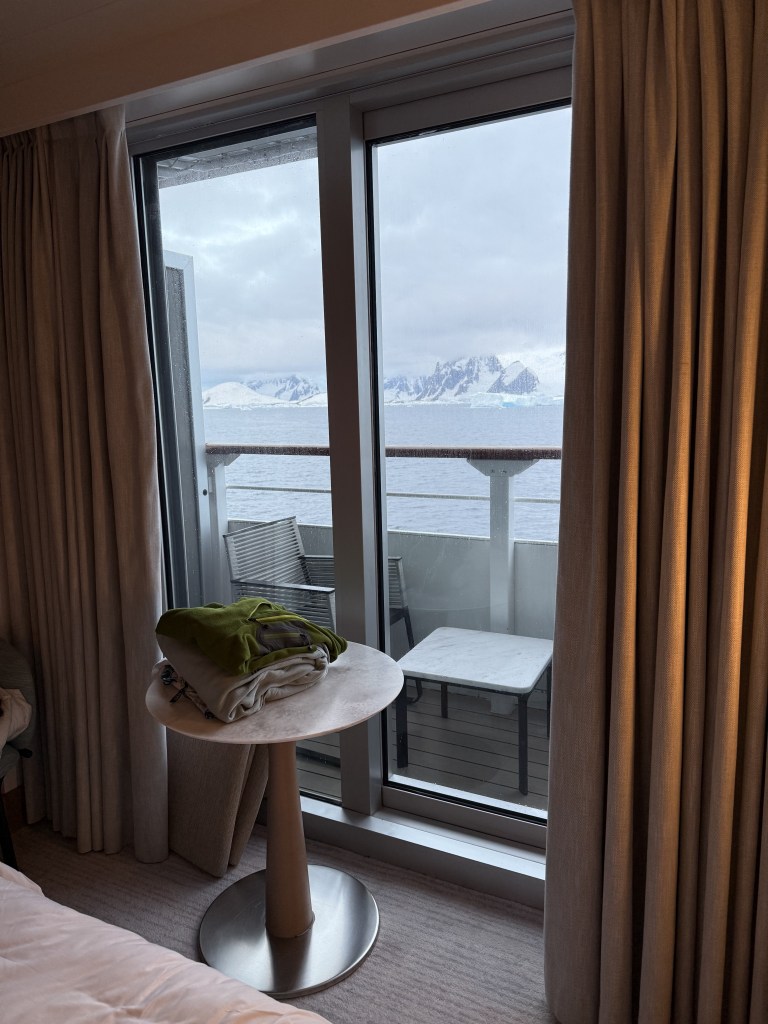
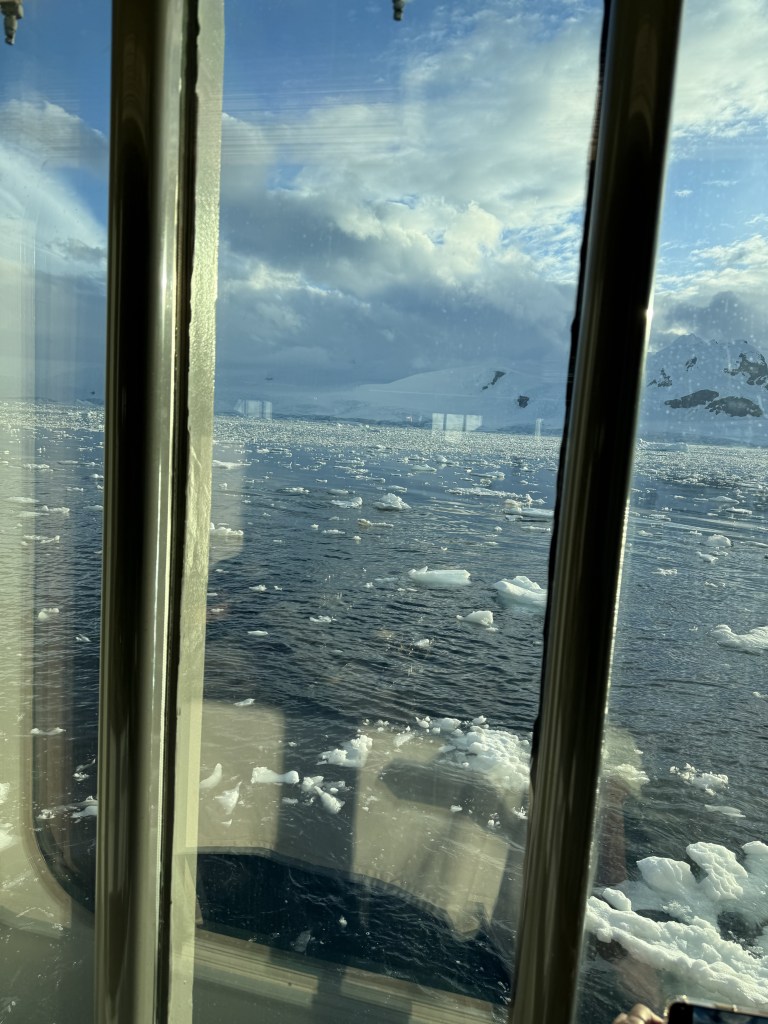
Here’s some other factors to consider:
- Cost –
- Talk about sticker shock! These trips can be super expensive. But when you think about it, each ship has it’s own set of expedition-specific crew, ~15 zodiac boats outfitted to specific regulations, and so much more. Costs can vary based on level of service (luxury vs. bare-bones). Cheap on sale rates can be around $6000USD, with an average rate around $10,000-$12,000 per person (comment if you found a hack to these rates! I would love to know).
- Educational experiences –
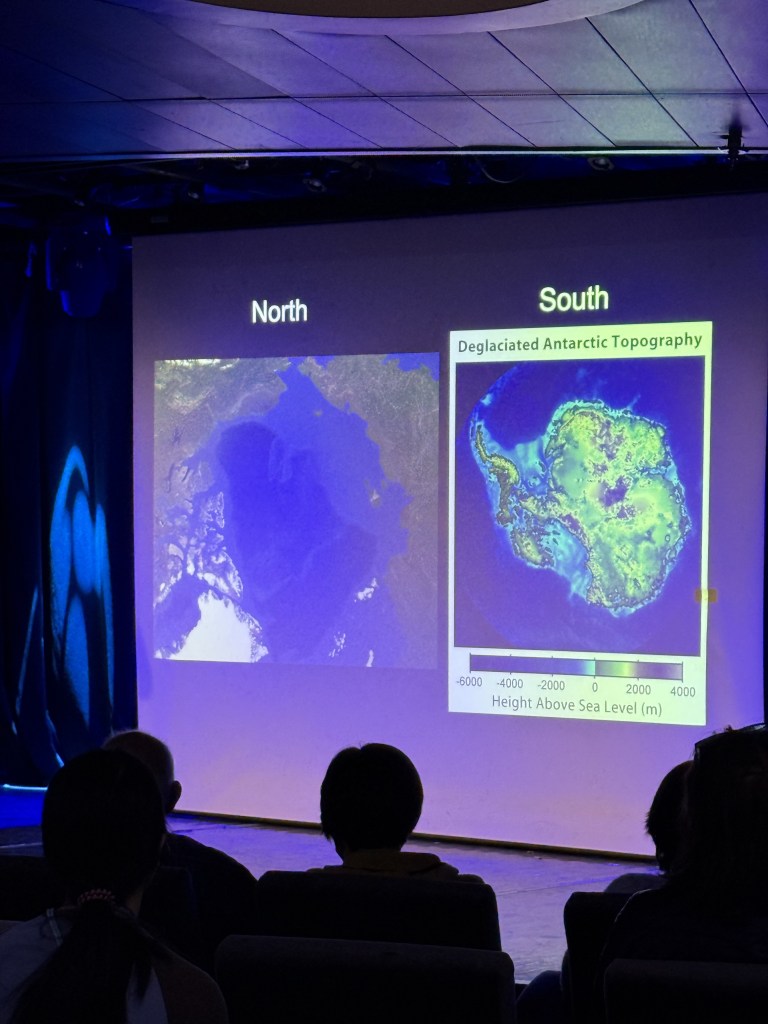
- Our ship had one Expedition Leader and 12-14 Expedition Crew who took you on zodiac tours (8 people per boat) and specialized in wildlife, environmental issues, rock formations, mosses, I mean you name it here – There were geeks galore. And they were always available – On the zodiac, learning sessions at night, during landing walks. You may want more or less of this – check out the tour providers website.
- Solo supplement –
- For me, this was a big factor as I was going alone. I didn’t need a lot of “solo only” activities like meetups or dining options, I really just needed a lower cost or close to no single supplement. Operators are starting to offer more discounts for solos. Check the solo supplement rate and which operators are offering the best deals. I booked Ponant, a luxury French line, specifically because they offered zero single supplement – Meaning if 2 people staying in a room pay $10,000 total (or $5000 each), then I would pay $5000. They also had a great duty of care transportation from Buenos Aires to Ushuia (where you pick up the ship). More on this later!
- Additional experiences –
- Want extras? See what operators offer. From what I saw, the most wildly offered were sea kayaking ($), camping in a sleeping bag for a night ($) and polar plunge / walk in the water to swim options. Niche luxury lines may offer helicopter rides, scuba diving and other crazy outrageous adventure things.
- Vibes –
- Full on expedition-all-day-every-day-never-take-your-boots-off-let’s-goooooo: Quark, Aurura. And Linblad/NatGeo is always a go-to for the learners
- Middle of the road adventure but not toooo much, also includes comfortable digs & food, maybe a spa: HX (formerly Hurtigruten), Atlas Ocean Voyages and Albatros for a younger, fun vibe.
- Ultra-luxury with gourmet food, spas and great staff to passenger ratio: Silversea, Seabourne, Ponant and Scenic.
- Onboard Research options –
- Some operators give passengers the option to partake in environmental research while on board. Gathering temperature data, samples, etc. Most of the ones I saw were in collaboration with Citizen Science. Here’s a link to Intrepid’s Citizen Science Program so you can see an example – But there’s plenty out there.
- Time of year –
- The most popular and expensive times are January and February – This is summer in the southern hemisphere and generally the most delightful weather experience (32-40F during the day). Tour companies may offer discounts for early or late season, but pack those extra long johns because it might be cold. Last-minute deals have been making a big surge this year I’ve seen, but you must have a flexible schedule.
Okay, so now that we’ve chosen our trip – Next up is PACKING, PACKING, PACKING, ugh what to bring, what do they provide, all of it! Then on to a full review of my specific trip on Ponant’s Le Boreal.
 The Disco Ball Traveler
Leave a comment